Disease Simulation Engine
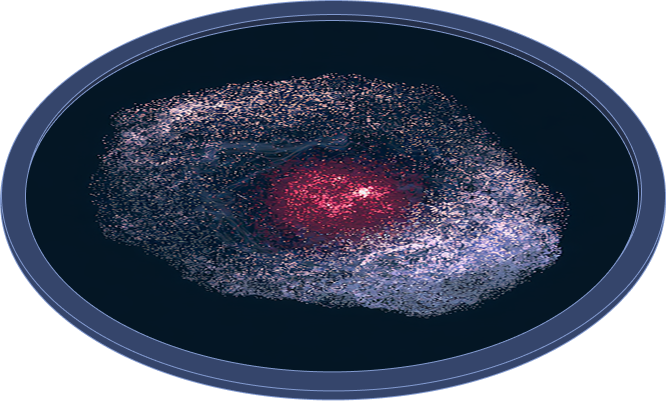
In silico simulations of disease biology: cellular state, perturbation response, therapeutic intervention. Grounded in the two data layers beneath.
Strategic angels from






Most AI in biology learns patterns from existing datasets. We simulate the biology beneath them: building mechanistic models of disease from patient tissue, so every prediction traces back to a mechanism.
Explore technologyPublic reference biology, proprietary multi-omic data, and a simulation engine that runs on top of both. Every prediction inherits the depth of the layers beneath it.
Book a demoIn silico simulations of disease biology: cellular state, perturbation response, therapeutic intervention. Grounded in the two data layers beneath.
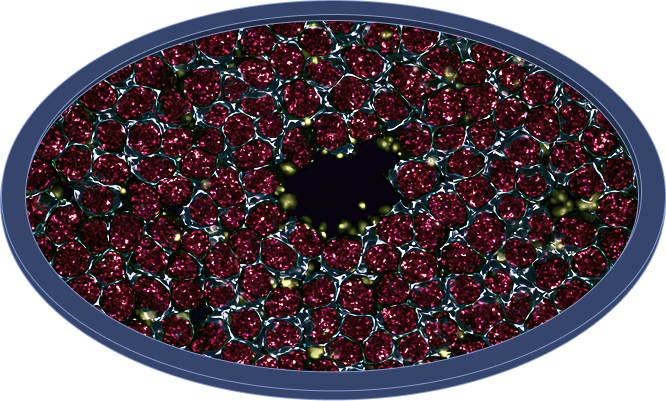
Proprietary multi-omic datasets from partner biobanks. Matched scRNA-seq, WGS, proteomics, and metabolomics at depth public sources cannot reach.
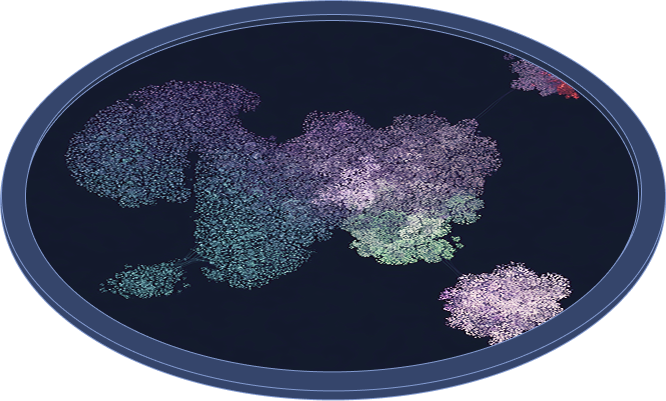
Open reference atlases, GWAS, and curated repositories like Open Targets, Expression Atlas, and PRIDE. The foundation layer anchoring every model.

Disease-scale simulation applied to neurodegeneration programmes, mapping how neuronal pathways shift in Parkinson’s and Alzheimer’s to sharpen target selection.
Read more
Profiling lead candidate CB-24 across 831 oncology cell lines to model the sensitivity and resistance patterns that point to the patients most likely to respond.
Read moreThe hardest indications in medicine are hard for the same reason: we don’t understand the diseased tissue well enough to drug it.
Our neurodegeneration platform changes the input. Single-nucleus transcriptomics at population scale, multi-omic integration across donor cohorts, foundation models trained on the diseased human brain. Parkinson’s, Alzheimer’s, ALS, MSA. Simulated before they’re trialled.

Immunotherapy transformed oncology for a fraction of patients. For most, it does nothing, and we can’t reliably predict which is which. The variable isn’t the drug. It’s the microenvironment around it.
Our immuno-oncology platform maps that microenvironment cell by cell. Spatial transcriptomics across patient tumours, multi-omic profiling of immune infiltrates, foundation models trained on the ecology of resistance and response. Breast, lung, melanoma, colorectal. Stratified before they’re treated.